Stop Buying the Wrong Electric Pump: The 2025 Buyer’s Guide
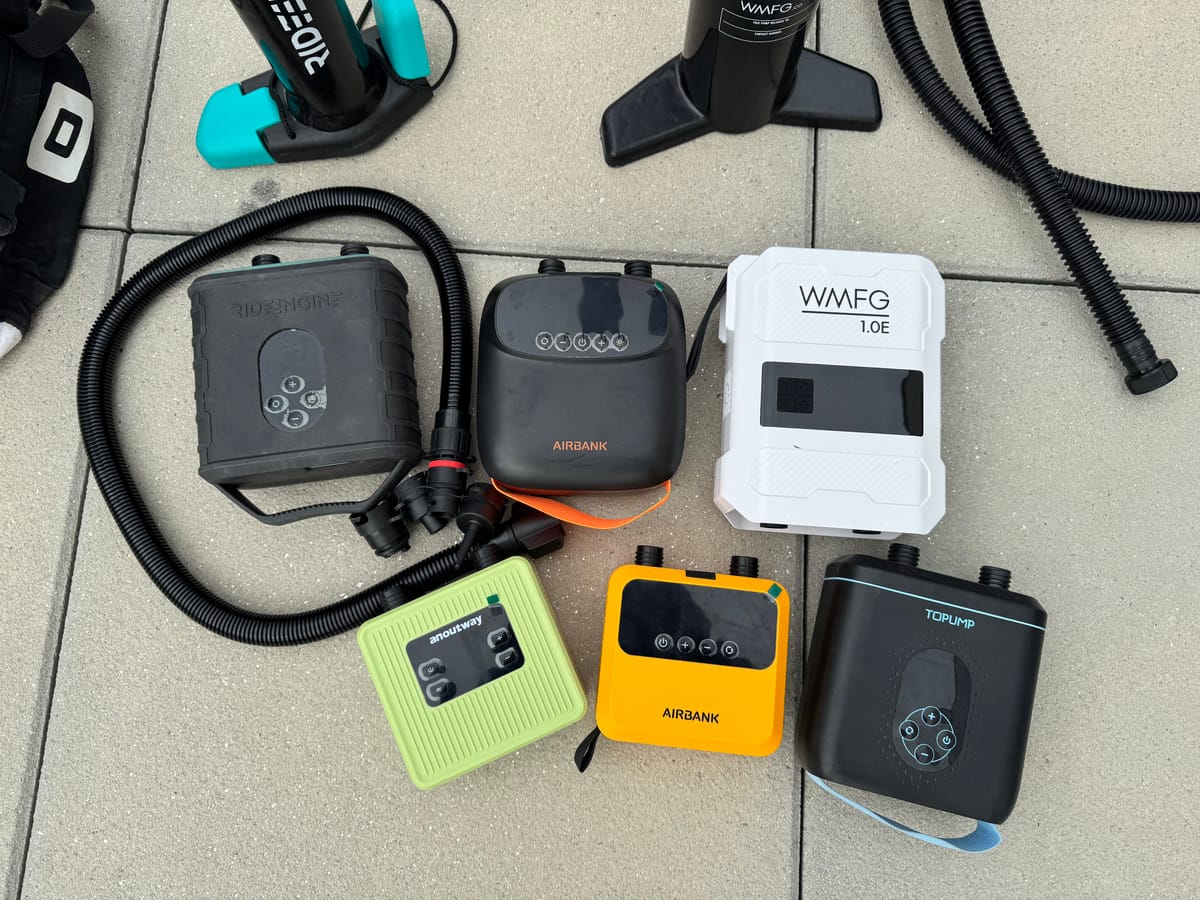
Electric pumps are popping up everywhere. It seems like every day a new brand hits the market, and you guys are constantly asking which one is worth your money. Instead of just doing another one-off review, I’ve put together a "mega-roundup." I put all the pumps I could get my hands on in a head-to-head comparison, and I focused primarily on the information you need to take into account when making a decision. That way this guide should be useful regardless of what pumps come out in the coming years.
I wouldn’t have been able to do this without MacKite sending out the WMFG pump, and Airbank sending me their Pulse Pro and Puffer Pro pumps. Neither company got any input on the content I created; all the opinions I’m sharing are unfiltered. I did put affiliate links for the products down below, the price is the same, but I get a small cut if you buy through the link.
The Testing
My goal with the YouTube channel and with this blog is provide as much transparency as possible. In order to do so I try to make my tests as real-world as possible, given my limitations as a busy working dad. For this test, I did things in two parts:
1) The multi gear pump test.
Here I used each pump to inflate a 12m kite, a 9m kite, a Wing, and then an inflatable wing board. I measured how long it took each pump to pump up that piece of equipment.
2) The Endurance Torture Test
I wanted to see how long these batteries actually last, but I knew I wouldn’t have the time to do it for each pump since the battery life tends to be quite good. I took the new Airbank Pulse Pro (the mini format) and pumped up a 15m kite repeatedly to see how far it could go.
The Results
I put the results for all of these electric pump tests here in this google sheet.
Multi Gear Pump test:
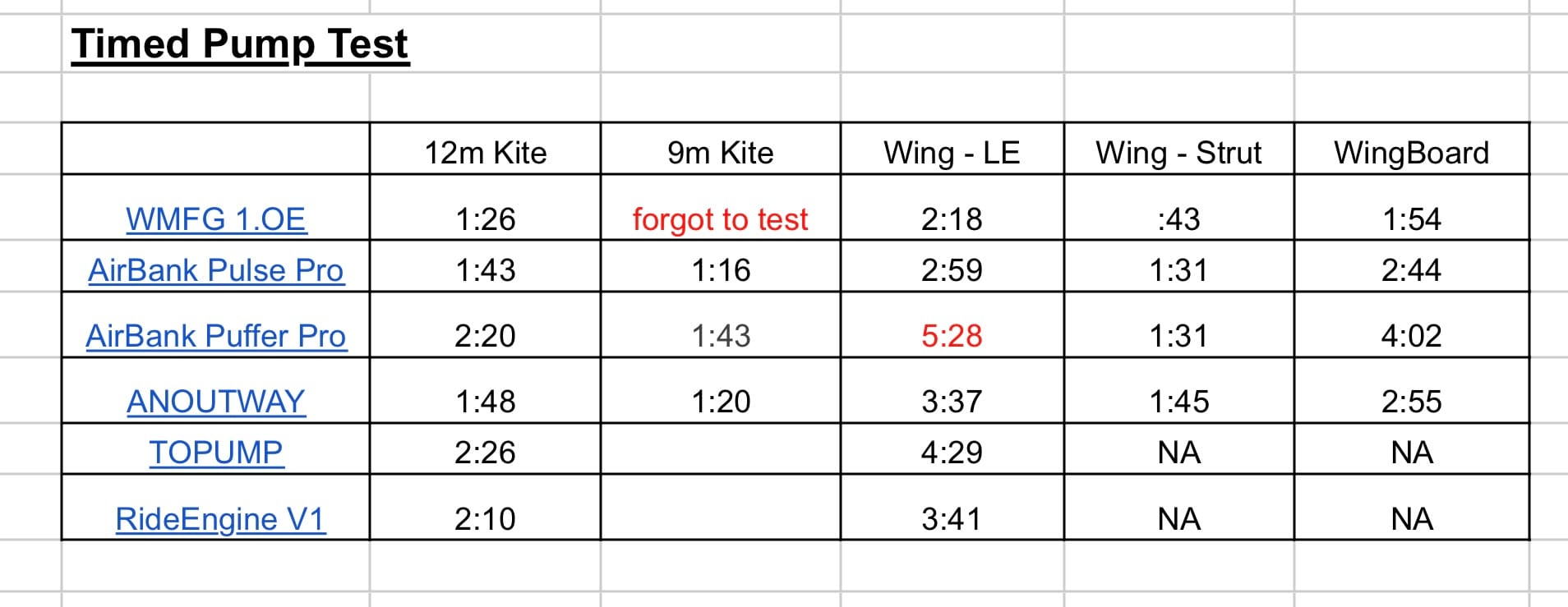
Here are the full measurements from the test. I had an issue with the leading edge wing test using the Puffer Air, so I’d throw that out because it was user error and not a pump issue. I also didn’t retest the Topump and the Ride Engine; I didnt think it was worth the effort since they were older generation pumps.
Endurance Torture Test:
The battery outlasted me. The pump ended up pumping in high pressure and low pressure mode for 20 minutes before I personally got too tired, and had to give up. I’d been in the roof sweating and pumping and deflating for hours and I just couldn’t keep going. The Airbank Pulse Pro was able to pump a 15m Core XR 10 times, which I think is a lot more than any reasonable person would need in a single session.
Lessons Learned
After putting these pumps through their paces, I did a lot of research on the specs and the differences between the machines to figure out what factors people need to consider. Here they are:
1) Endurance: Don't Just Look at mAh
I used to think you just bought the pump with the highest milliamp hours (mAh). I was wrong; mAh doesn’t tell the full story because it doesn't account for voltage. To find the true capacity, convert it into Watt Hours (Wh) using this formula:
( mAh voltage ) / 1000 = Wh
For example, a pump with 4500mAh at 14V actually has more "fuel in the tank" than a 5200mAh pump at 11V . Always check the Watt Hours for a true comparison of runtime.
2) Durability: The Elements vs. Electronics
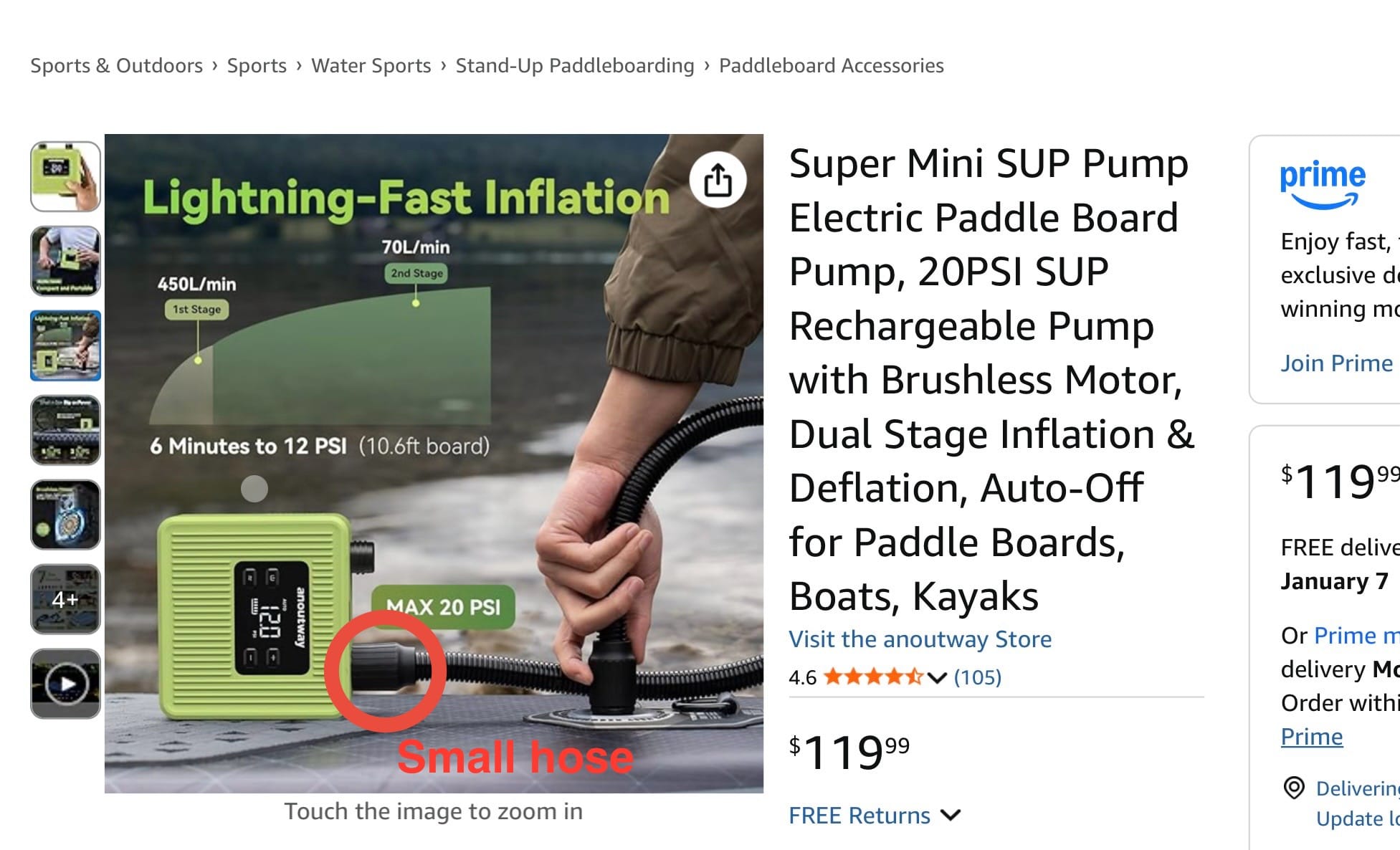
Manual pumps are absolute tanks, they can handle being treated poorly for years. The only issue I’ve ever had with a manual pump is a cracked hose. You’ll also notice that in my durability test, the smaller, thinner hose broke. So, first and foremost, be aware of that and make sure you have backup hose (and don’t trust the smaller one).
Next, you’re going to want to think about water. It could be raining, or you could be on a boat and salt water could be pouring in over the side. In either case, your electric pump is not going to like that. You’re going to want one with a plastic cover like the Ride Engine, or you’ll want a dry bag to go with it, to help protect it from rusting. A few people mentioned in the comment section that salt water is the biggest killer of electric pumps.
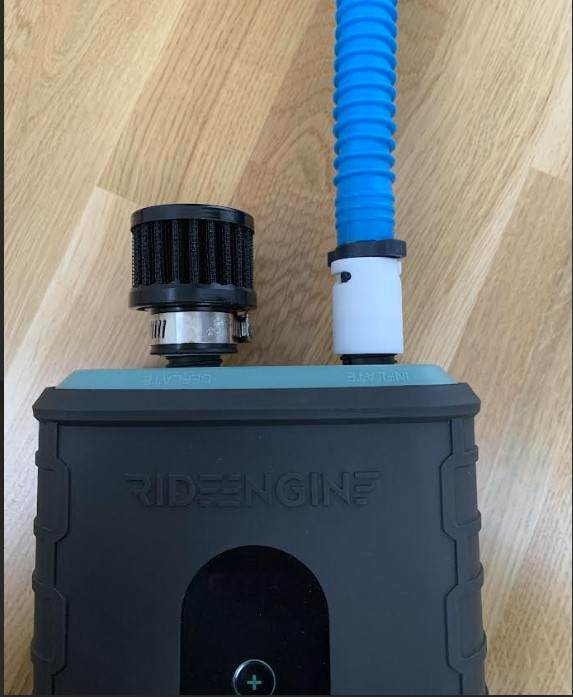
Last but not least, you’re going to want to watch out for sand. Depending on the pump, sand can get sucked into the intake or through the vents on the sides. The new Duotone Laze pump comes with in intake filter, and it also looks like it gets ride of any other vents on the sides of the hose.
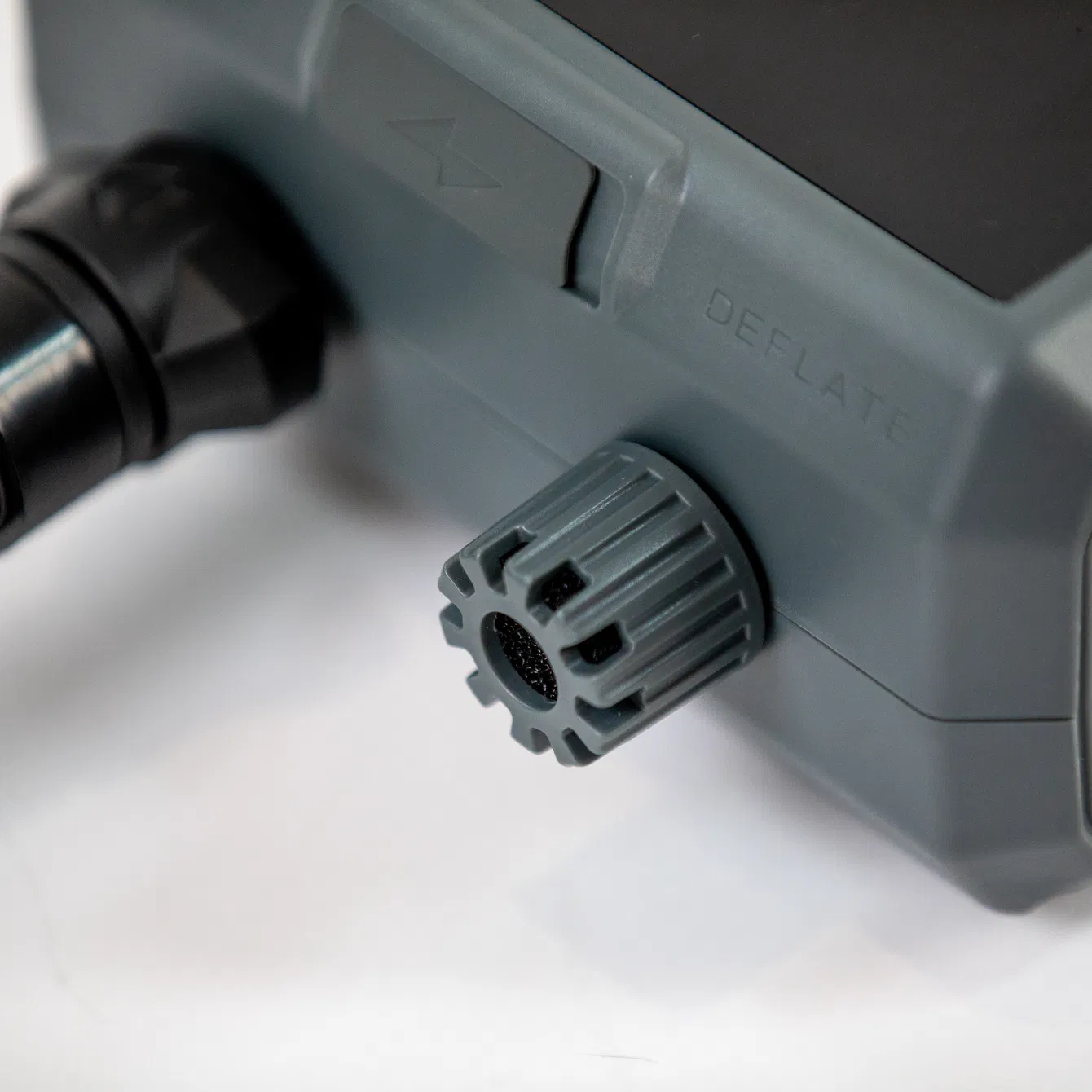
The other option is you can look at after market filters, like the ones being shared here in this Kiteforum post. Forum user freeskiwake has made a 3d printed version that you can print yourself and add to your electric pump on your own.
3) Compatibility & Proprietary Parts
So first you want to look at the charging plug, and for most of these pumps it’s USB-c. I love that because it’s the only plug I’m using these days, so I’ll always have that kind of cable with me.
The next thing you’ll need to be aware of is the hose and the nozzle adapters on the hose. They aren’t completely standard. The hose only seems to work with these electric pumps, it won’t work with your manual pump. And it’s not compatible the other way either, you can’t use the hose from your manual pump with your electric pump.
I would steer clear of any pump that comes with the smaller hose, or at least make sure to buy a full size hose backup. I had the smaller diameter hose break on me during my endurance test.
4) Redundancy: Have a Plan B
I think it’s crucial to think about redundancy when it comes to electro pumps. As we saw in the endurance test, the host broke, so you’re going to want about backup hose. This was true prior to electric pumps, I broke my hose once when I was out on a remote kite session… and I vowed to carry a backup hose with me ever since.
The next major area of redundancy is the battery. If you get to the kite spot and you forgot to charge your pump, you’re going to have a hard time getting going. This is where it can be helpful to have the 12v barrel adapter that allows pass through charging. These plus allow you to plug your electric pump straight into a cars 12v charging port, and pump your kite while being plugged in.
You technically could use usb-c charging from your car to power up your electric pump, but you won’t be able to run the pump directly off of usb-c. You’ll have to wait until your pump charges before you can start pumping, so there is an advantage and a reason to get a pump with the barrel adapter (like the Ride Engine Airbox V1 , Airbank Puffer Pro, or the new Duotone).
Last but not least, I recommend carrying a safety pump. I’ve heard a lot of stories about people having electric pumps die on them from too much sand or salt water exposure. In this scenario, I prefer the ride engine micro pump. It’s smaller than your typical manual pump, but it takes up a lot less space, so I think its the perfect backup.
5) Brand vs. Off-Brand
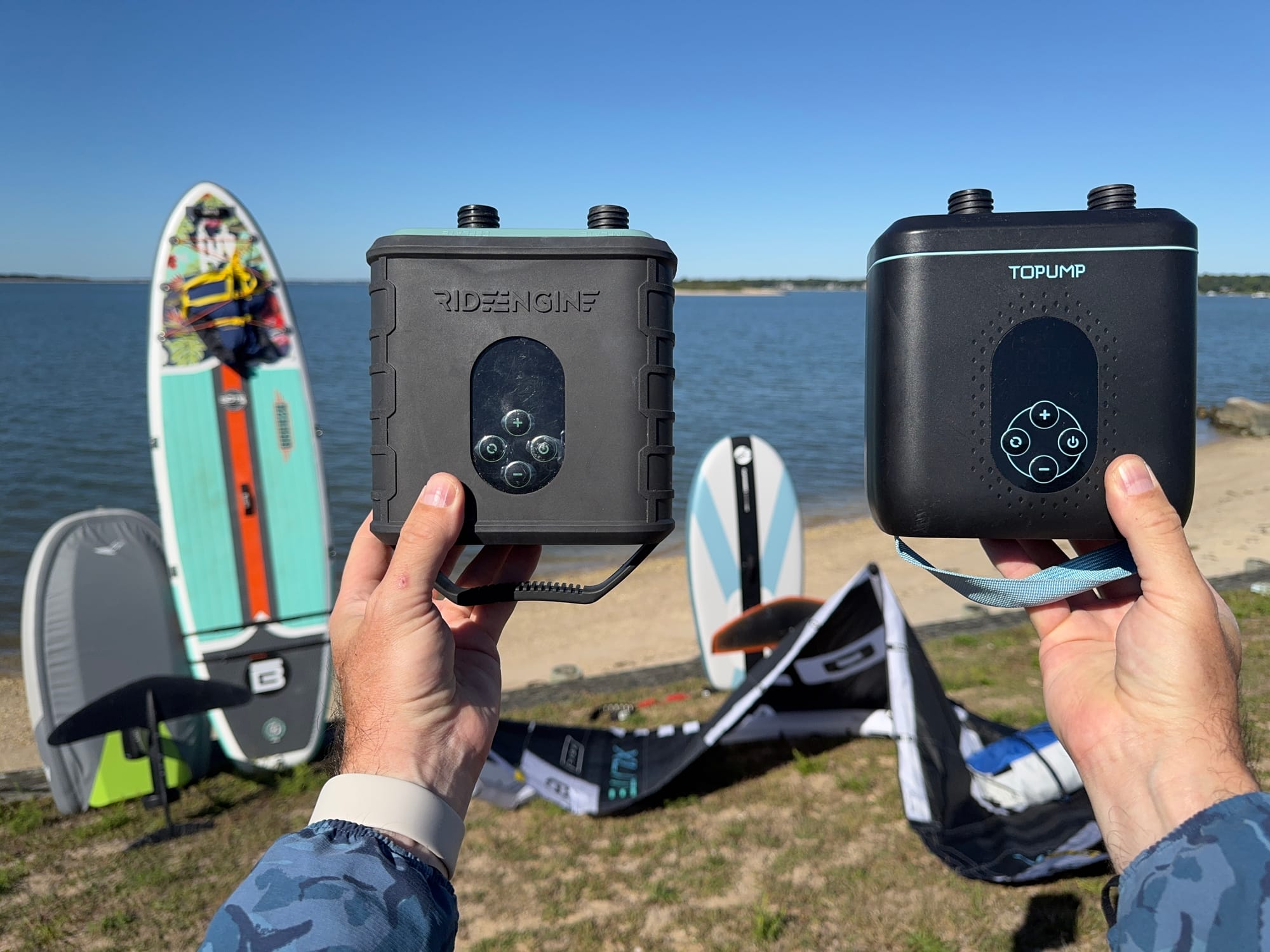
In my first two electric pump videos, I had come to the conclusion that all of these devices are made in the same factory, and thus all of the internals must just be the same. After this more aggressive testing, I’m starting to realize that the brand name pumps are performing better and pump equipment up faster. I can’t tell you exactly what makes the difference, since the stats are the exact same across many of the brand and off-brand pumps. I can just say that the ToPump and the Anoutway pumps were slower than their branded counterparts (Airbank, RideEngine, etc). Maybe it’s different types of engines, or tighter internal clearances inside the casing.
The Details
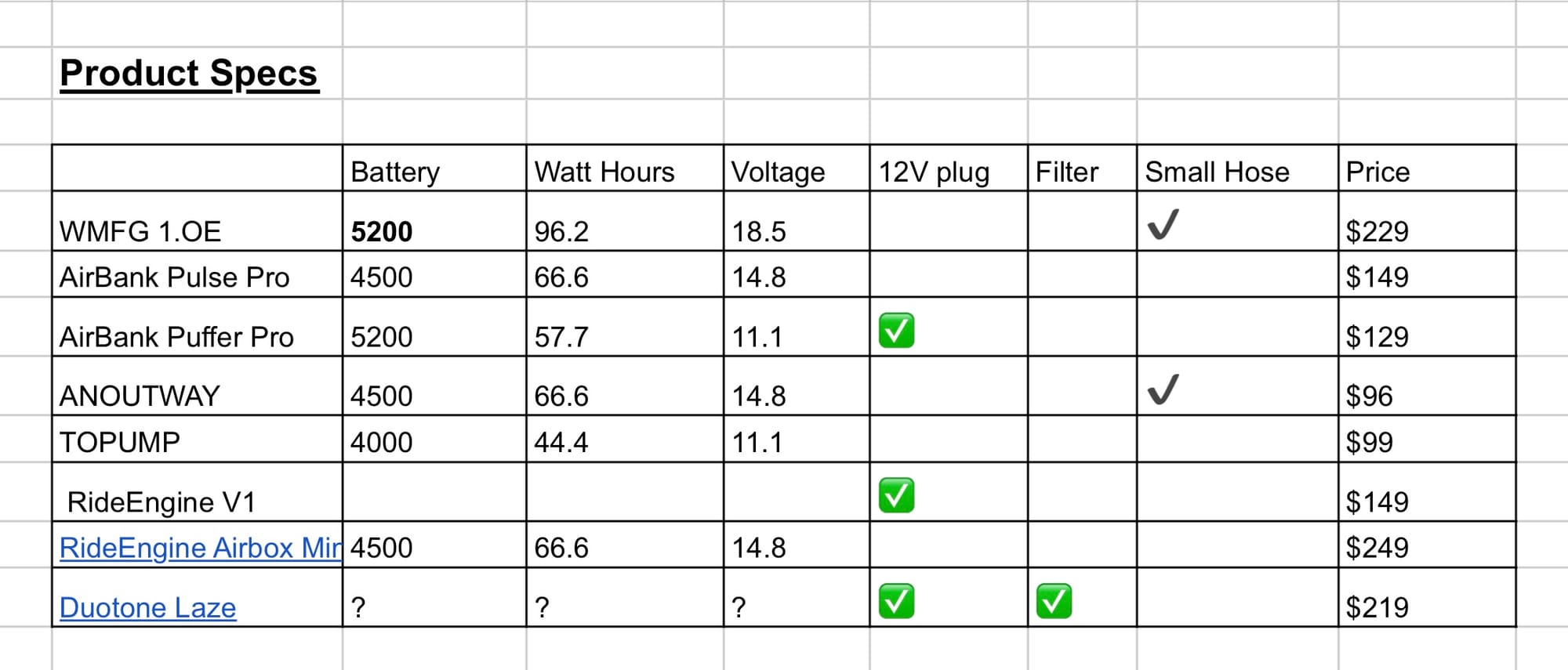
To help visualize all these factors, I put together a cheat sheet of the different characteristics you should take into account when buying a pump.
Conclusion / Recommendation
If I had to pick one pump for my situation it would be the Airbank Pulse Pro. I live in Brooklyn and I am working with very limited space, so the small size just works for me. It’s also perfect for travel, it takes up a lot less space than a regular pump.
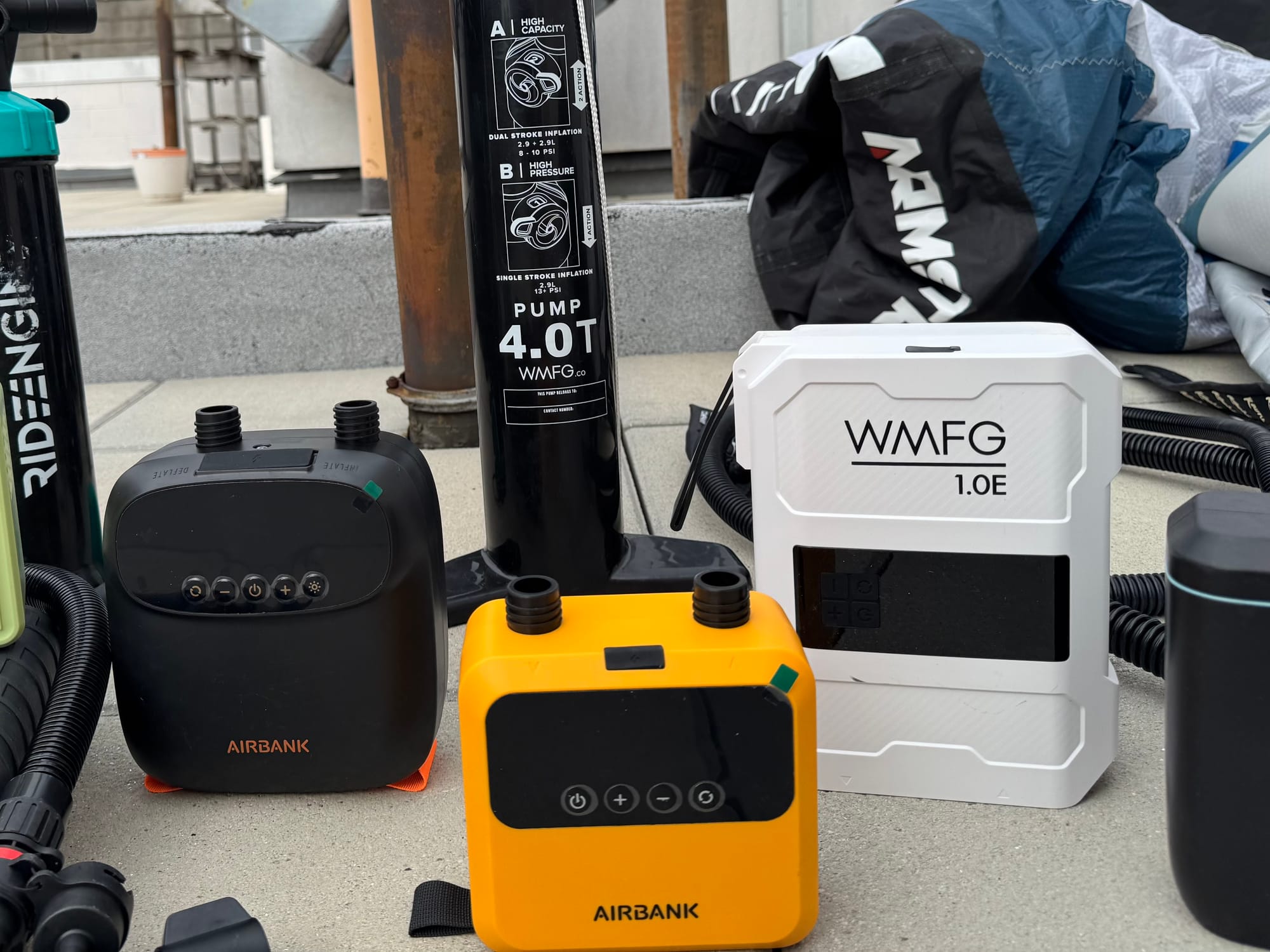
For those of you that want the most speed and battery endurance, I’d go with the WMFG pump. It was noticeably faster than everything else in the test.
After that I’d recommend going for something with the barrel adapter pump if you’re able to park near your kite spot. That would be the Airbank Puffer Pro or the Duotone Laze.