How the King of Action failed to adapt to the creator economy
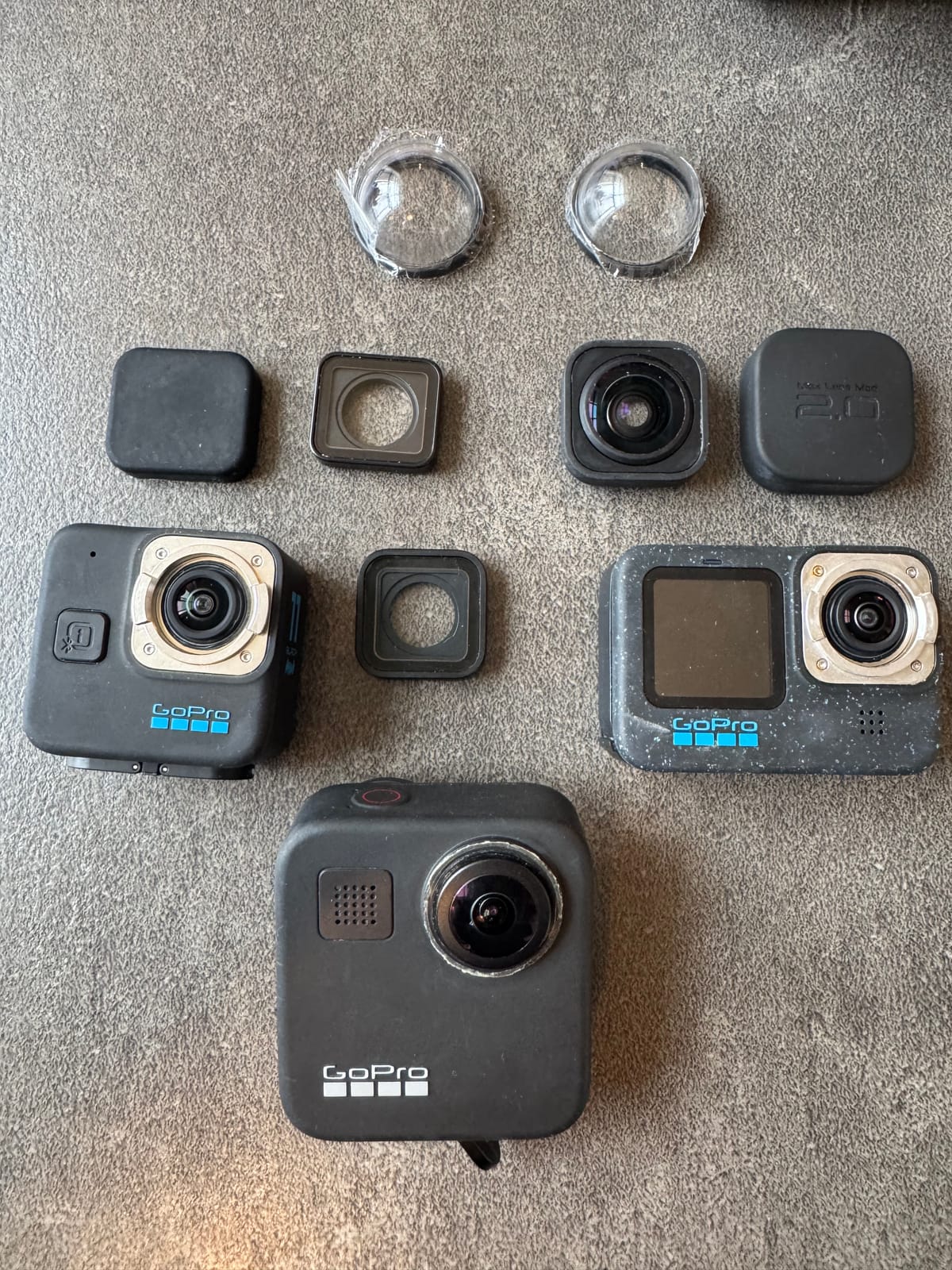
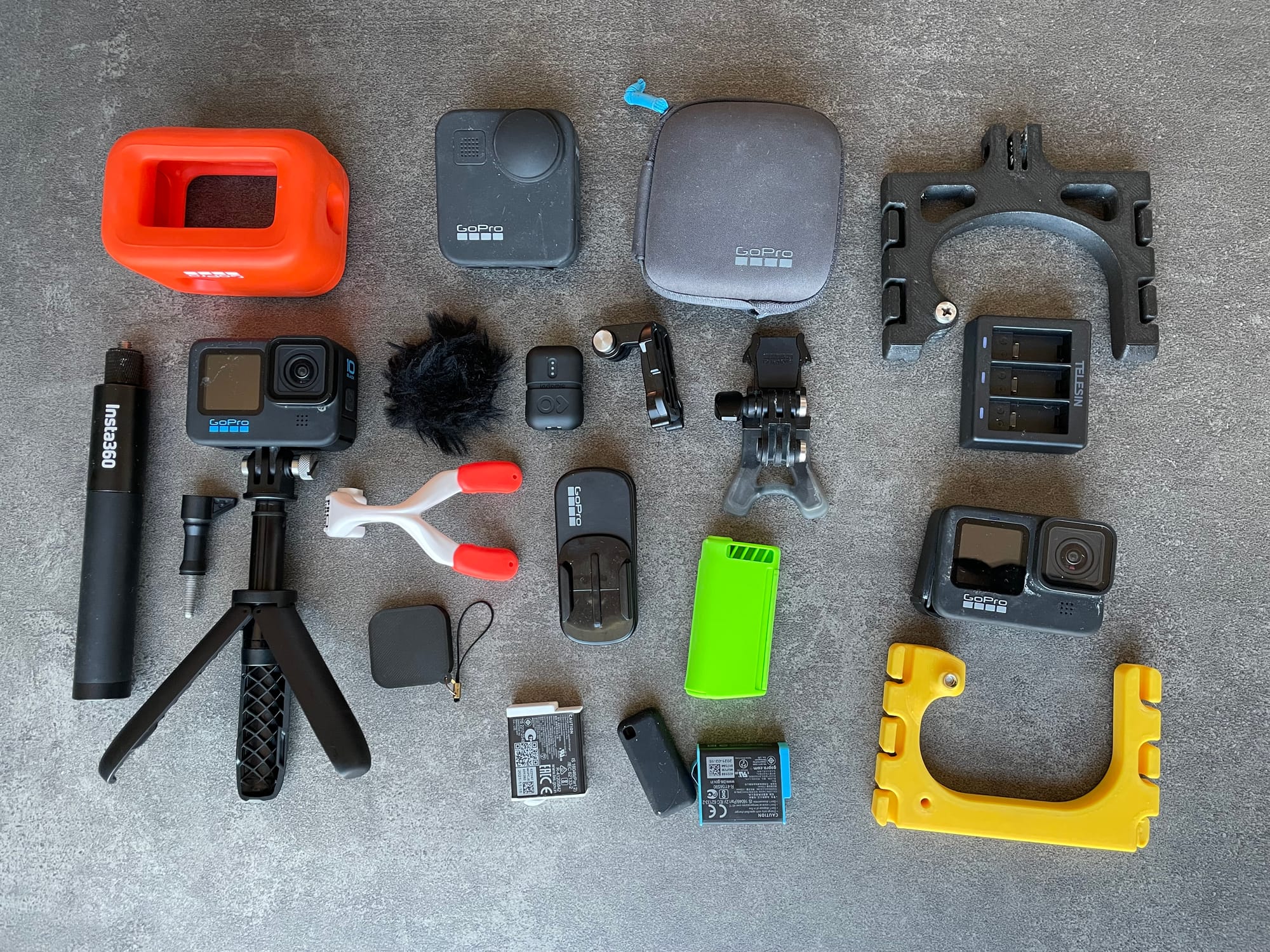
I love my GoPros. I’ve used them for over 12 years, I’ve captured countless priceless memories on them, and I wouldn’t have a YouTube channel without them. They didn’t start out great, but every year from 2013 to 2022 the new cameras improved my life and my content creation process. The issue is that GoPro and its camera line up feels increasingly behind and out of touch.
Today’s post is meant to explore why that is.
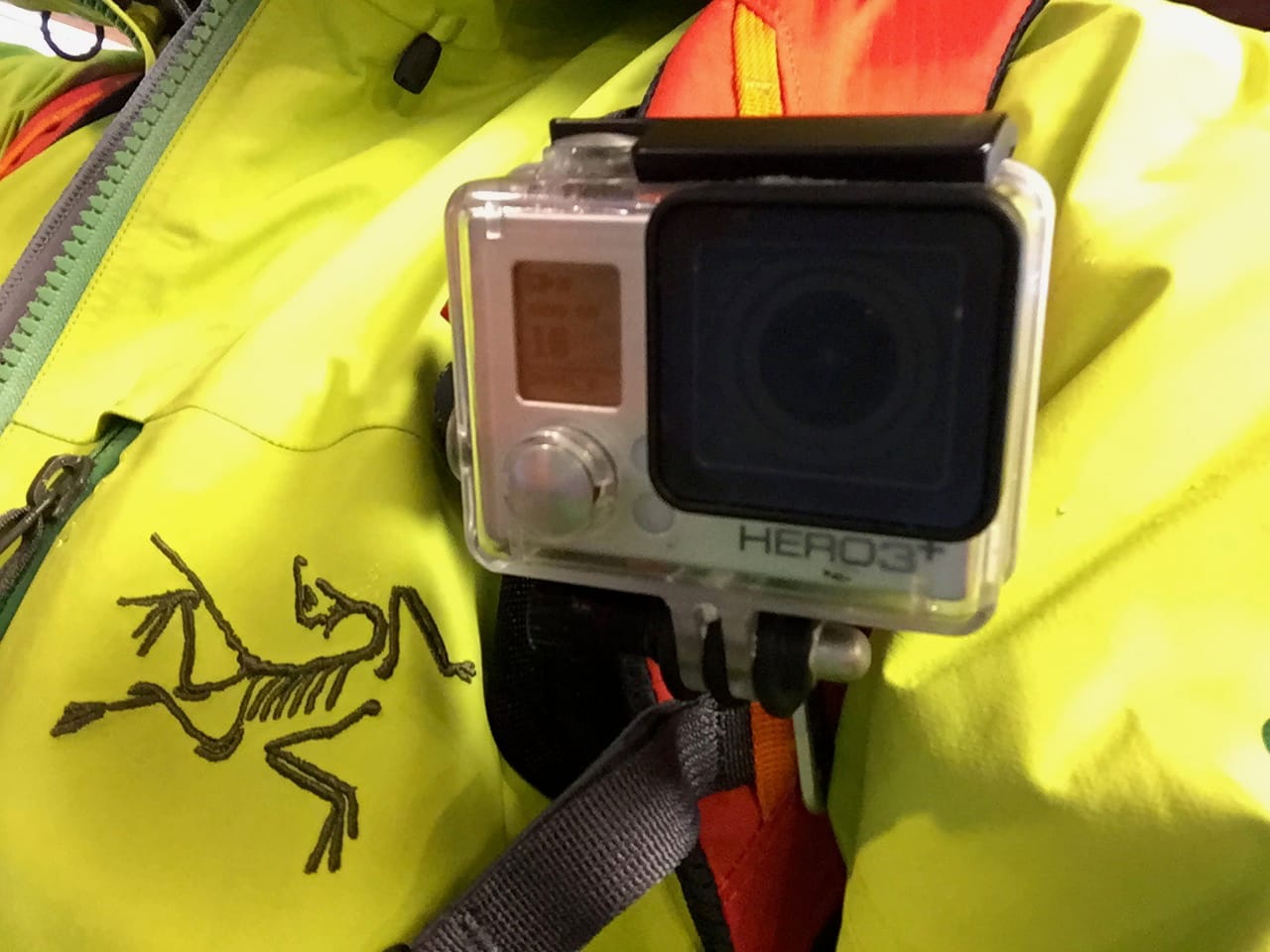
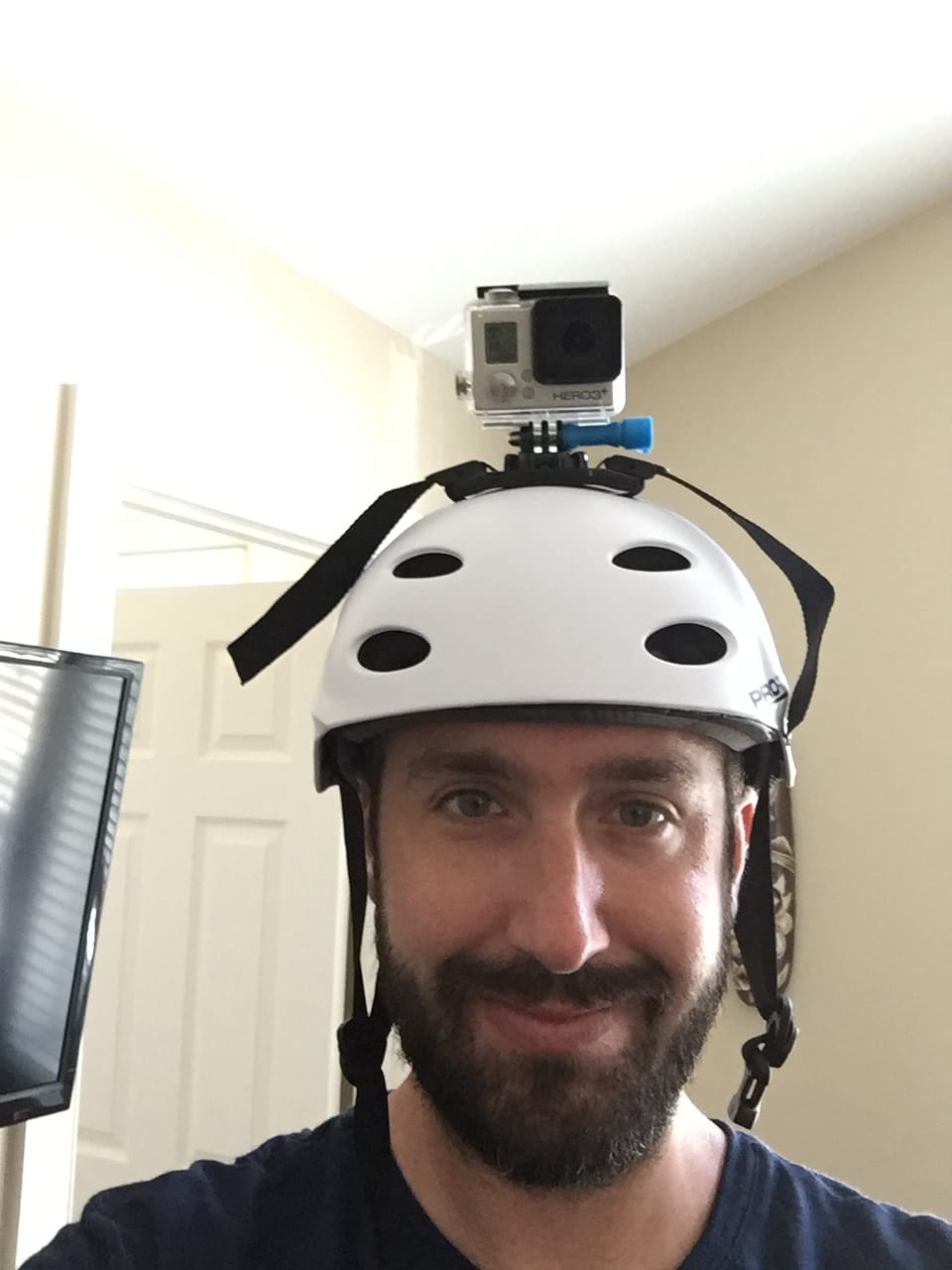
GoPro 3 in 2013

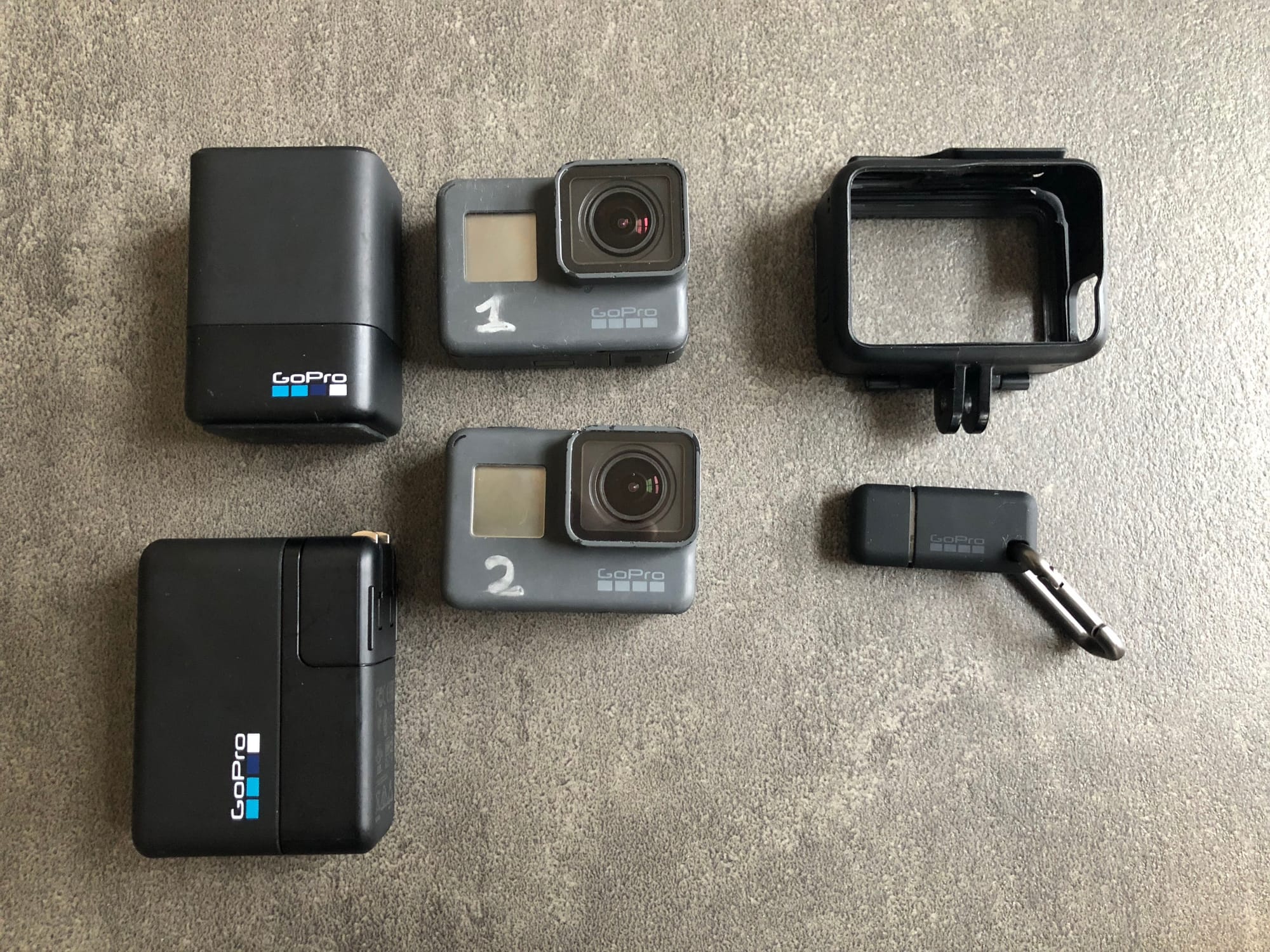
GoPro hero 5 in 2016
What They Got Right: The Viral Clip Era (2002–2014)
The company was born in the era of the extreme athlete. The vision was helping any average Joe capture their extreme moment. They were WAY ahead of their time, with gopro being founded in 2002, even before YouTube was purchased by Google in 2005.
GoPro was there with an innovative piece of gear, that helped people catch the extreme moment as YouTube was gaining momentum sharing people’s dumb viral moments. I would called this the “viral clip” era of YouTube, and it was like AFV (Americas Funniest Home Videos), but super charged.
Not only was the timing great, but the competition from camera phones at the time was still limited…
The Content Creator Disconnect: Missing the Shift (2016 – Present)
GoPro peaked in 2014,
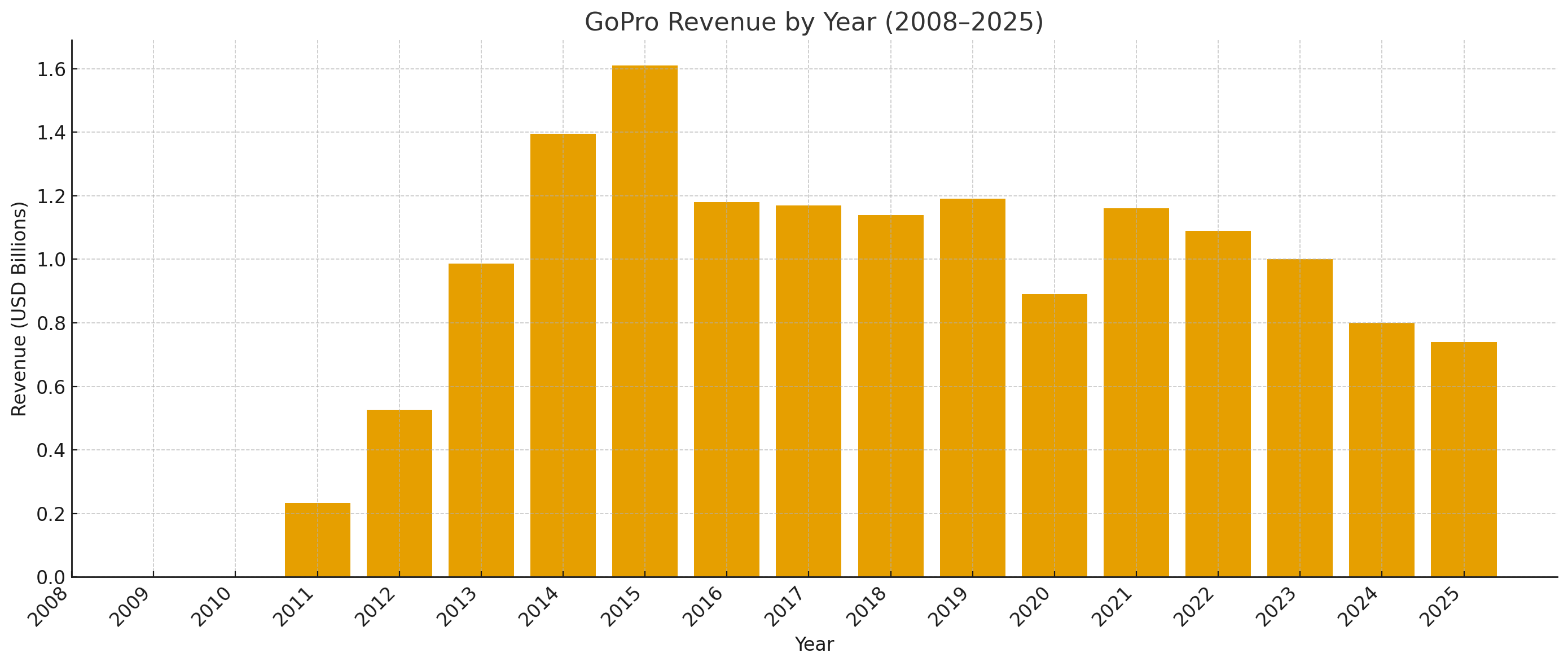
YouTube launched its partner programs for content creators in 2006 and 2007, but we didn’t see content creator emerge as a major content segment for the mainstream until 2016-2017.
Somewhere in this time frame, YouTube and other content sites switched from “viral clip” sharing to a world in which content creators where intentionally creating content just for these social mediums. The production quality went way up, the sophistication of the content went way up, and viewership started to follow.
I think GoPros recently struggles can all be tracked back to this moment. They stayed the company of the extreme athlete and the viral clip, and then didn’t become a company that could support the more sophisticated workflow of a modern content creator. Add on top of this, the extreme pressure being placed on all camera companies by the quality of the iPhone camera, and you have a clear existential threat.
Concrete examples of the miss
None of these situations where obvious to me as I watched them unfold, but in hindsight it was clear that each one was a missed opportunity that put them further behind. The fell from being a necessary tool in a creators toolkit to a nice to have.
1) The lack of audio options
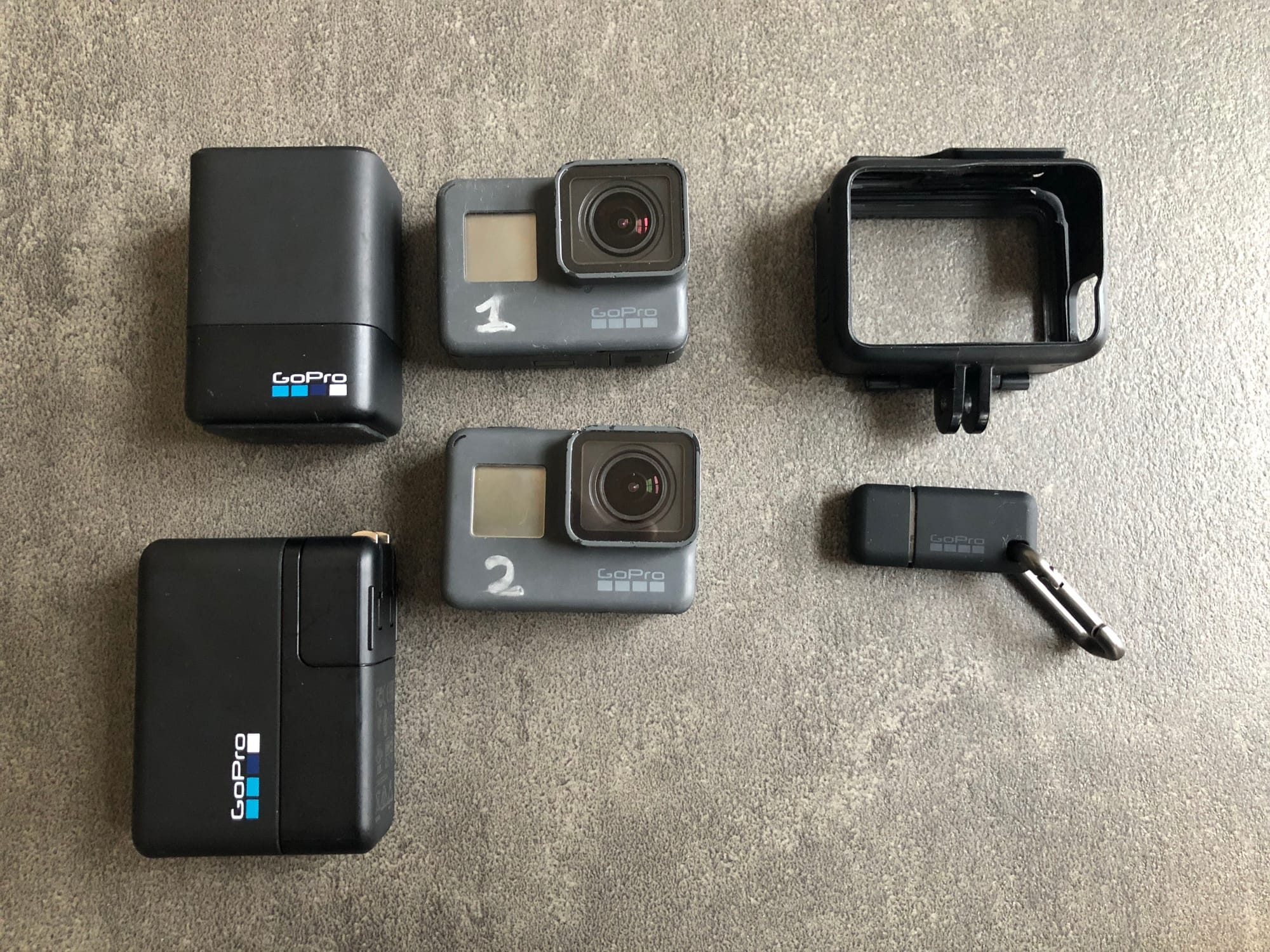
GoPros audio dongle was clearly an after thought… even in 2016 when it first came out. But fast forward to 2025, it’s basically unconscionable that they dont have better options for wired and wireless mics. The media mod is slightly better, but i dont want to have to put a case on my camera just to get audio.
Look at this Frankenstein that I had to hack together to make a blogging setup:
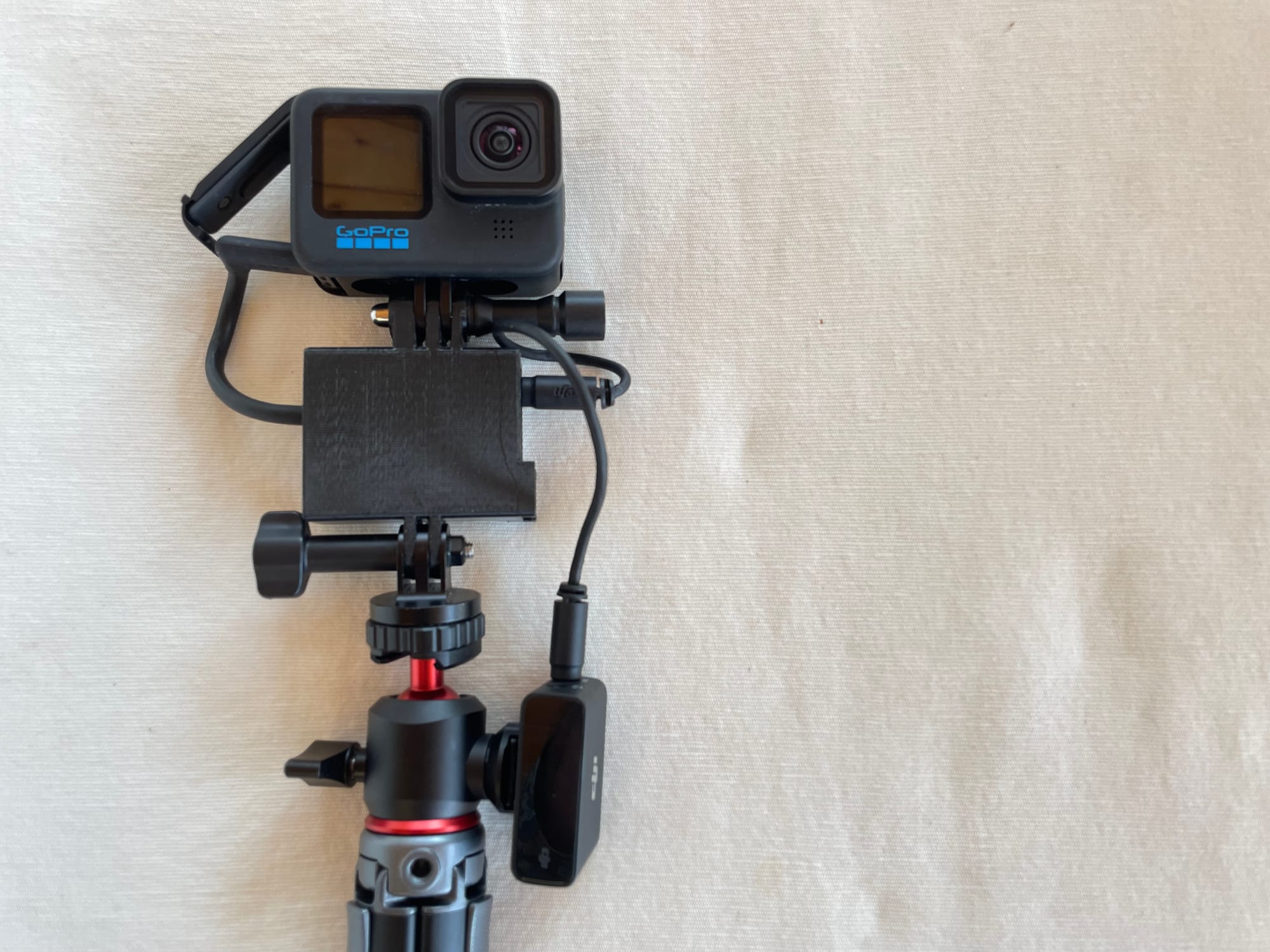

Ultimately I want systems that are quick and easy to use. I had to 3d print a GoPro audio adapter holder that would sit on top of a tripod below the GoPro. That way I could quickly remove the GoPro from an action mount, clip it into this vlog setup, and then film some talking head footage.
I think plenty of creators started filming action on their action cams, and then spilled over into filming other content, such as talking head or vlogging content. When this happened they needed to go in search of a system that better supported audio (probably a mirrorless camera or their phones).
2) The lack of consistent desktop software
When I shoot gopro content for my YouTube channel, I often have to shoot a lot more footage than I ultimately use. Part of this is because I’m not a particularly skilled photographer, part of it is that I’m terrible at planning my videos in advance, and part of it is that kitesurfing is unpredictable. But in the end , I need to review quite a bit of footage in order to find the footage I’m going to end up using in a final video, and that is almost impossible to do on a phone.
I want to be able to dump that footage onto my desktop, yet still have access to the ability to change lenses from 8:7 to max hyper view from the desktop, or in Final Cut Pro. GoPro finally launched a MacOS version of the quick app in 2024, but then turned around and canceled it by the end of the year. Right now I have to pass them back to my phone to make changes, and it becomes very slow very quickly.
3) The lack of smaller cameras
Increasingly I want to capture things that are not high action, but they require my hands to be free. For this I want a camera I can clip to my hat or my collar. One that is light weight and wont get in the way. GoPro started the the trend in smaller cameras with the session back in 2015… but they never really cracked the formula. Now options like the DJI Nano and the Insta360 Go are popping up , and they look extremely compelling to me.
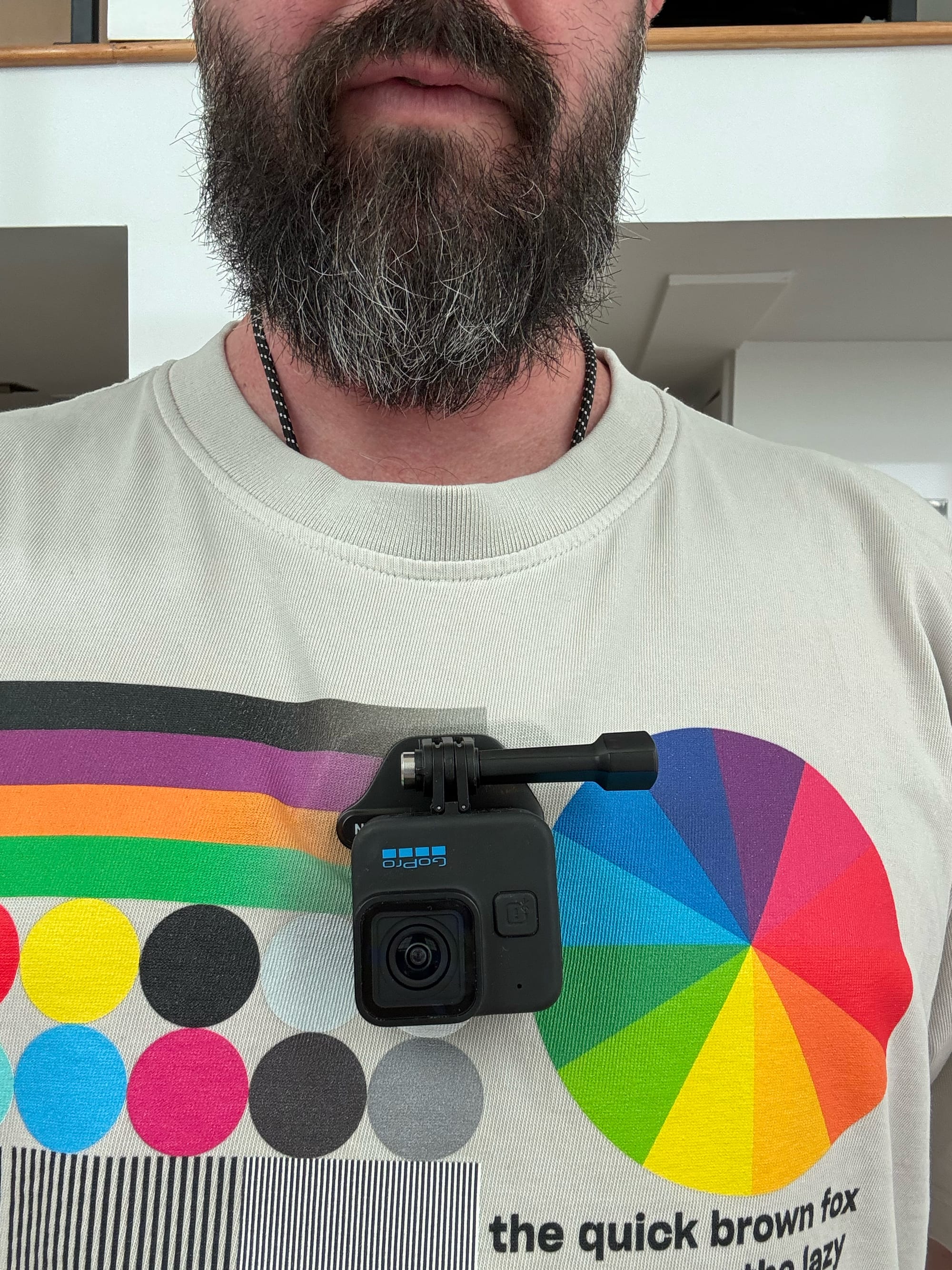
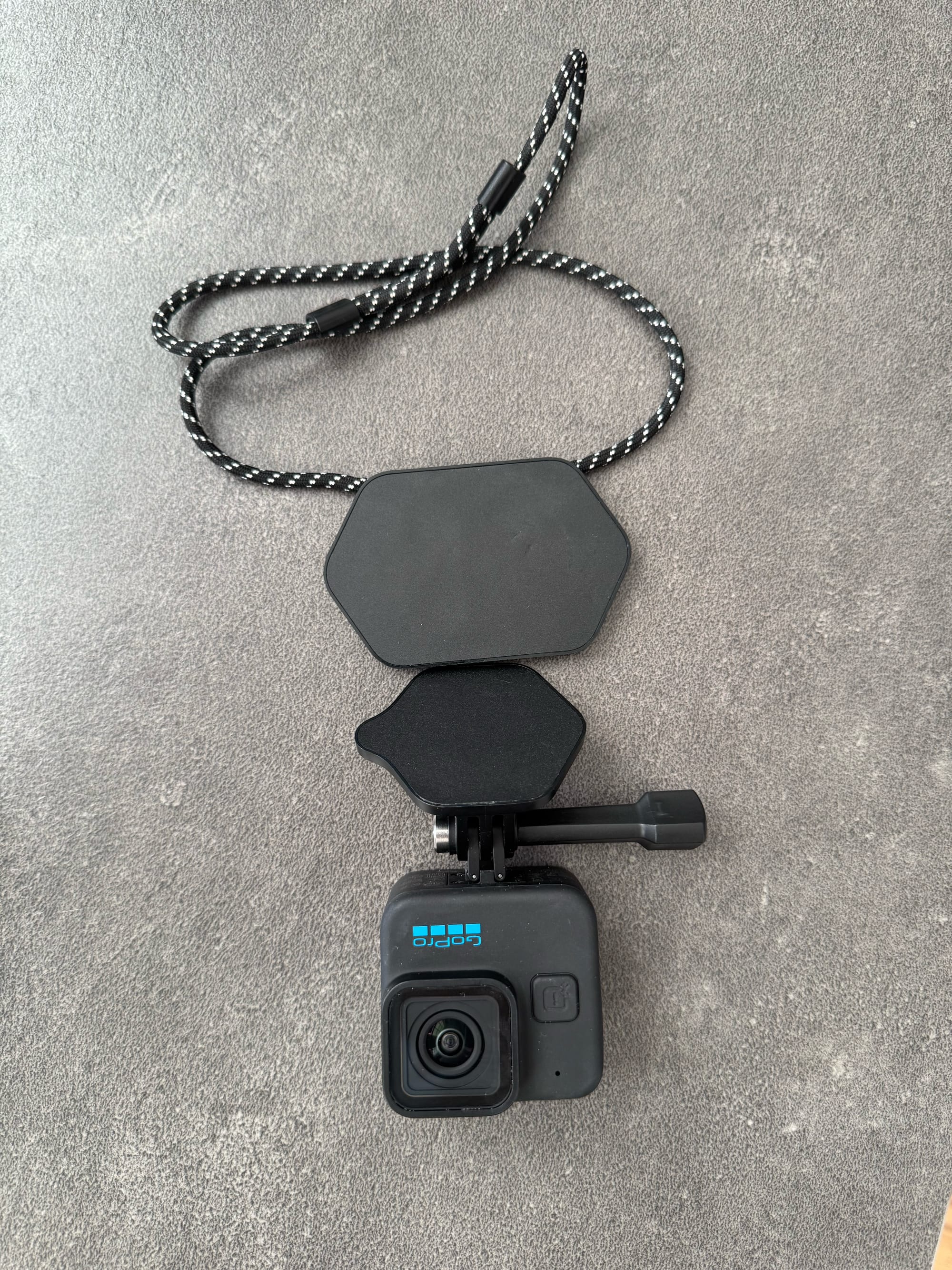
I like the GP11 mini, but I can’t love it because its not small enough to carry all the time everywhere. It compromised on size to keep all features, and I would have compromised on more of the features to get a smaller size.
How to Course Correct: From "Action" to "Workflow"
I think a key part of what made them successful to being with was that they deeply understood their user. Their CEO, after all, was a surfer trying to share his clips with his friends.
I think they need to make some bigger changes to align with company with understanding their user. Rather than focusing on that single extreme moment, they need to shift their focus to everything that happens on the way to that moment, or after that moment.
I GoPro started down this path with Abe Kislevitz. He started to make good content on YouTube that showed his sports heavy life style, and integrated GoPros and GoPro education into his content. I think where they missed is that it still felt like too much of an extension of the gopro marketing team, and not enough like Abe as an independent content creator.
They should have backed a creator or two in every sport that was starting to branch out into lifestyle content, the time around their extreme moments. Surfers, skiers, snowboarders, paddle boarders, mountain bikers, etc. The more deeply the company immerses itself in the modern world of content creation, the better it’ll understand the broader market of content creators, and the more likely it’ll be to keep up with the cameras they need.
Conclusion?
Did they miss the boat? Do they have a chance at recovering?
At this point, I dont know. People seem to like the GoPro Max 2, but it only seems like a modest improvement after almost 5 years to me. I cannot for the life of me figure out who’s buying the Lit Hero (the one with the built in LED) or even the Hero. Those cameras seem too close together, and too hard to distinguish from each other.
Session 4 (2015) >> Session 5 (2016) >> Hero 11 Mini (2022)>> Hero (2024). Thats 10 years of wandering strategy with nothing really landing. Over this time they dropped from 60-70% market share down to 18%… I think it’s going to be hard to pull back into the lead after such a long time of being out of the running.
While the writing on the wall does not look good, It’s not going to stop me from rooting for GoPro. I’ve had a good run with them, I have 12 years of capturing great memories, and if they can turn things around, I’ll stick with them.